However, while the terms are sometimes used interchangeably, they do not mean exactly the same thing.
A classic car is a broad category that can include everything from prewar automobiles and vintage luxury vehicles to iconic American cruisers.
A muscle car, on the other hand, generally refers to a performance-oriented American automobile associated with powerful engines, aggressive styling, and an emphasis on straight-line performance.
Understanding the difference can help you appreciate automotive history and make more informed decisions when exploring collectible vehicles.
Let's take a closer look.
1. What Is a Classic Car?
A classic car is generally an older automobile valued for its historical significance, design, craftsmanship, rarity, or cultural importance.
There is no single definition of a classic car that applies universally. Different organizations, insurance providers, states, and collector communities may use different age and eligibility requirements.
Classic automobiles can represent many different automotive eras and design philosophies.
Some examples include:
- Prewar automobiles from the early twentieth century.
- Vintage American sedans and convertibles.
- European luxury automobiles.
- Classic sports cars.
- Vintage touring cars.
- Iconic American muscle cars.
What makes a classic vehicle special is not necessarily its speed or engine size.
Its appeal may come from its historical importance, distinctive design, engineering, rarity, or connection to a particular period.
For example, the 1935 LaSalle Series 50 Convertible represents the elegance and Art Deco-inspired styling of prewar American automotive design.
Its significance comes from its design and historical character rather than muscle car performance.
2. What Is a Muscle Car?
Muscle cars are generally associated with American performance automobiles that combine powerful engines with relatively accessible performance and distinctive styling.
The category became especially prominent during the 1960s and early 1970s.
Manufacturers competed to develop vehicles that delivered exciting acceleration and appealed to drivers who valued performance.
Some of the most recognizable muscle car names include:
- Pontiac GTO.
- Chevrolet Chevelle SS.
- Ford Mustang.
- Chevrolet Camaro.
- Dodge Charger.
- Plymouth Road Runner.
- Pontiac Firebird.
These vehicles helped shape American automotive culture.
Many muscle cars featured large-displacement V8 engines, rear-wheel drive, bold exterior styling, and performance-focused mechanical components.
However, not every powerful American car automatically qualifies as a traditional muscle car. Definitions vary among enthusiasts, historians, and manufacturers.
3. Classic Cars vs. Muscle Cars: The Main Differences
Although muscle cars can also be classic cars, there are several distinctions worth understanding.
| Feature | Classic Cars | Muscle Cars |
|---|---|---|
| Definition | Broad category of historically significant older automobiles | Performance-oriented American automobile category |
| Primary appeal | History, design, craftsmanship, rarity, nostalgia | Engine performance, acceleration, styling, driving experience |
| Origins | Multiple automotive eras | Primarily associated with the 1960s and early 1970s |
| Manufacturers | American and international brands | Primarily American manufacturers |
| Body styles | Sedans, convertibles, coupes, roadsters, and more | Often coupes, hardtops, and performance-oriented body styles |
| Engine types | Wide range of engine configurations | Traditionally associated with powerful V8 engines |
| Collectibility | Depends on historical significance, rarity, condition, and demand | Often influenced by performance heritage, originality, and rarity |
The most important distinction is that classic cars describe a broad automotive category, while muscle cars describe a more specific performance-oriented segment.
4. How the Golden Age of Muscle Cars Changed Automotive History
The 1960s introduced an exciting period of competition among American automobile manufacturers.
Consumers increasingly wanted vehicles that combined everyday usability with exciting performance.
Automakers responded by introducing larger engines, sportier styling, performance packages, and special editions.
The Pontiac GTO is widely recognized as one of the defining early examples of the American muscle car movement.
Chevrolet, Ford, Dodge, and Plymouth soon developed competing performance vehicles.
This competition helped establish a generation of automobiles that remain highly recognizable today.
Muscle cars became more than transportation. They represented freedom, individuality, performance, and an important part of American popular culture.
Their influence can still be seen in modern performance vehicles.
5. Design and Styling: Different Approaches to Automotive Art
Classic automobiles are appreciated for their design, but the visual characteristics of these vehicles vary considerably.
Classic Car Styling
Depending on the era and manufacturer, classic cars may feature:
- Sweeping body lines.
- Distinctive chrome details.
- Elegant grilles.
- Curved fenders.
- Handcrafted interior elements.
- Unique dashboard designs.
Luxury automobiles often emphasize refinement and sophistication.
Prewar vehicles may showcase elaborate exterior details and distinctive proportions.
Muscle Car Styling
Muscle cars often feature a more aggressive visual identity.
Common characteristics include:
- Long hoods.
- Wide body proportions.
- Prominent grilles.
- Sport-inspired interiors.
- Performance badges.
- Bold paint colors and racing stripes.
- Large wheels and tires.
Their styling communicates performance and personality.
Neither approach is necessarily better. They represent different priorities and different periods in automotive design.
6. Engine Performance and Driving Experience
Performance is one of the biggest distinctions between traditional muscle cars and many other classic automobiles.
Muscle cars were developed with acceleration and power as major selling points.
Their engines, transmissions, suspension systems, and overall configurations were designed to create an exciting driving experience.
Other classic vehicles may prioritize comfort, smoothness, engineering innovation, or long-distance touring.
For example, a classic luxury automobile may offer a quiet and comfortable ride, while a vintage muscle car may deliver a more aggressive driving character.
Of course, actual performance depends on the specific model, engine configuration, mechanical condition, and any modifications.
A vehicle's original specifications should always be considered when evaluating its capabilities.
7. Which Is Better for Collectors?
The choice between a classic car and a muscle car ultimately depends on personal interests.
Choose a Classic Car If You Appreciate:
- Automotive history and heritage.
- Unique styling from different decades.
- European and American luxury automobiles.
- Vintage craftsmanship.
- Rare or unusual vehicles.
- Collecting across multiple automotive categories.
Choose a Muscle Car If You Appreciate:
- American automotive performance.
- Powerful V8 engines.
- Iconic 1960s and 1970s designs.
- Racing and performance heritage.
- Distinctive muscle car styling.
- The history of American horsepower.
Some collectors prefer one category, while others build collections that include both.
A diverse collection can showcase the evolution of automotive design, engineering, luxury, and performance.
8. Explore Both Worlds at Yellowstone Classic Muscles & Chrome
One of the most exciting aspects of collecting automobiles is discovering how different vehicles represent different periods and philosophies of automotive design.
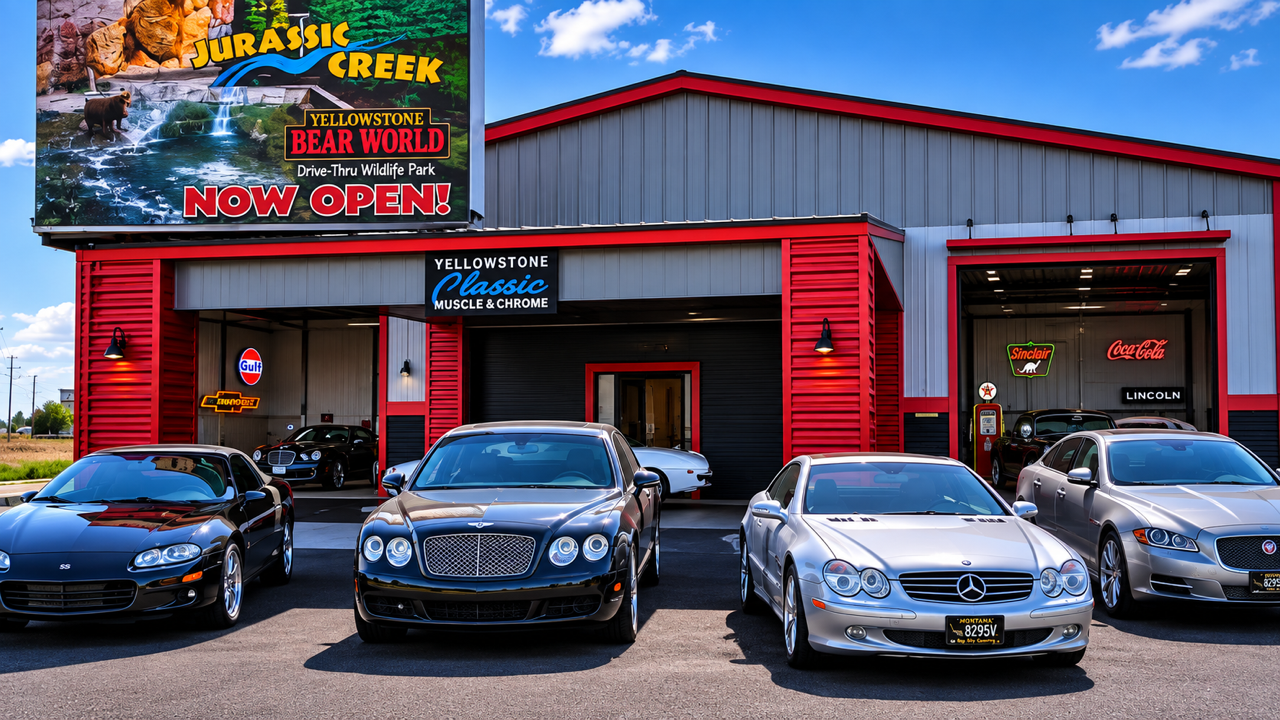
At Yellowstone Classic Muscles & Chrome in Rexburg, Idaho, visitors and collectors can explore a collection featuring classic cars, vintage muscle vehicles, and exotic luxury automobiles.
The current featured collection includes vehicles such as the 1969 Pontiac Firebird HO, a performance-oriented American classic, alongside distinctive automobiles like the 1935 LaSalle Series 50 Convertible.
The showroom also features luxury and exotic vehicles from recognized manufacturers, giving automotive enthusiasts an opportunity to appreciate different styles of engineering and design.
Whether you are interested in American muscle or classic automotive elegance, exploring different vehicle categories can deepen your appreciation for the automobile.

Final Thoughts: Two Categories, One Automotive Legacy
Classic cars and muscle cars represent different sides of automotive history, but both have earned lasting places in collector culture.
Classic cars celebrate the evolution of automobile design, craftsmanship, and engineering.
Muscle cars highlight a particularly exciting period in American performance history.
Understanding their differences makes it easier to appreciate what makes each vehicle special.
Discover Your Next Automotive Favorite
Explore the collection at Yellowstone Classic Muscles & Chrome. Browse our available vehicles, discover automotive heritage, and experience the craftsmanship behind some of the most memorable automobiles ever produced.
Visit yellowstoneclassiccars.com to explore our collection.
1015 words • Reading time ~8 minutes